This is a talk I gave at the Themed Entertainment Association's SATE conference in Singapore this year called "What if you can't give them what they came for?" The talk itself was heavily crafted for that room and presentation format, which I don't think will communicate with the same power in this medium. But this medium offers a different opportunity to spend a little more time on each of the threads I wove together and take a closer look at how we design experiences currently, how we might approach designing for transformation, and discuss how we can approach wellness, discovery, and dignity in our work without sacrificing the business case.
I've split out the key threads of my 20 minute talk into a six post series I'll share an installment of weekly. Here's the first one. Let this start a conversation. Agree, disagree, uncertain? Reach out and let's talk about it.
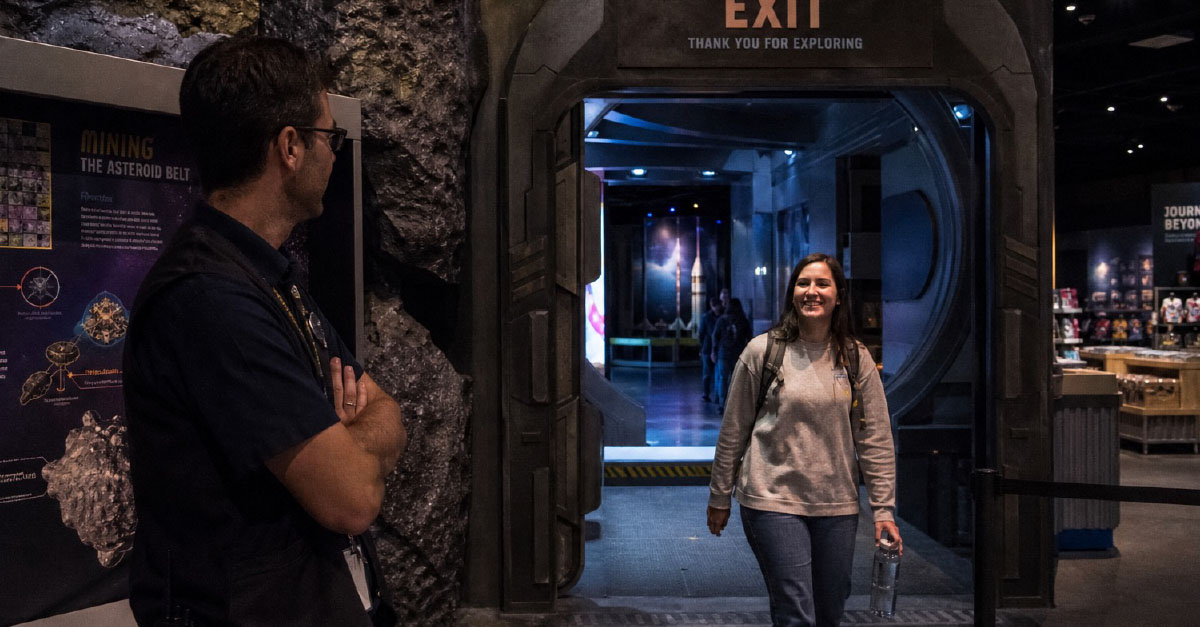
Sometime in the past year, you stood near the exit of something you built and watched a guest leave smiling. The work was good. You knew it was good. But some part of you also knew that by the end of the week they wouldn’t remember much of it.
You know that second part because you're a guest too. You’ve walked out of exhibits, shows, parks, and you were satisfied. Engaged the whole way through. It did a job. Like lunch. It may even have felt important in the moment. But on the way out, you were already looking for the next thing because whatever you walked in carrying that day, you walked out still carrying it. Untouched.
I'm not here to say that was bad work. It usually isn't. But good is not the same as lasting.
That gap is why wellness has been talked about so much in our industry this year. It's a useful word that names a hunger the dashboards don’t. But the temptation, once a word like that is on the table, is to put it on a vague experience and let the language do the work. A quiet room. A program with the right vocabulary... This isn't necessarily wrong. It only becomes a problem when the word is expected to do the job the visit never earned.
While that word might help us name what we want to build, it’s easy to overlook that the people who come to us were already looking for something.
Before anyone walks through ours, they walked out of their own. We like to say the couch is our biggest competitor. Nobody beats it for nothing. There are human needs that still push people out the door. The visit doesn't create the looking. It inherits it.
Ask a guest what they came for and they'll probably say "a good time," or "an escape." That's what we think we're delivering too. It's not untrue, but I think the driver sits a little deeper. When we go out, I think we're all looking to satisfy some basic human cravings.
For connection. A sense of belonging to something larger than ourselves.
For recognition. Not in the same way that every space already watches us, but seen for who we are.
For possibility. A world bigger than the one we arrived with, or feeling equipped to thrive in the one we know.
For grounding. A sense of where we stand, in a place, a history, among other people.
And (the one we like to talk a lot about) for agency. The sense that what we do here counts for something.

These are what a guest is looking for when they choose to leave the house, and to some degree, it's what we design for. Nobody asks for these at the ticket window, but we know when a visit reaches us and when it doesn't, even when everything else went right.
Those cravings aren't the whole picture. The harder point is the condition that makes them matter. We've gotten excellent at building hours that evaporate. Satisfaction. Easy guest flow. A smile at the exit. Those are real crafts, but they're not the same craft as leaving someone with something that still belongs to the rest of their life.
Good work that evaporates is still good work. It's also incomplete. I see the field is reaching for the incomplete part. Wellness is one name for the reach. Discovery is a mechanism. The mistake is to treat the word as the delivery.
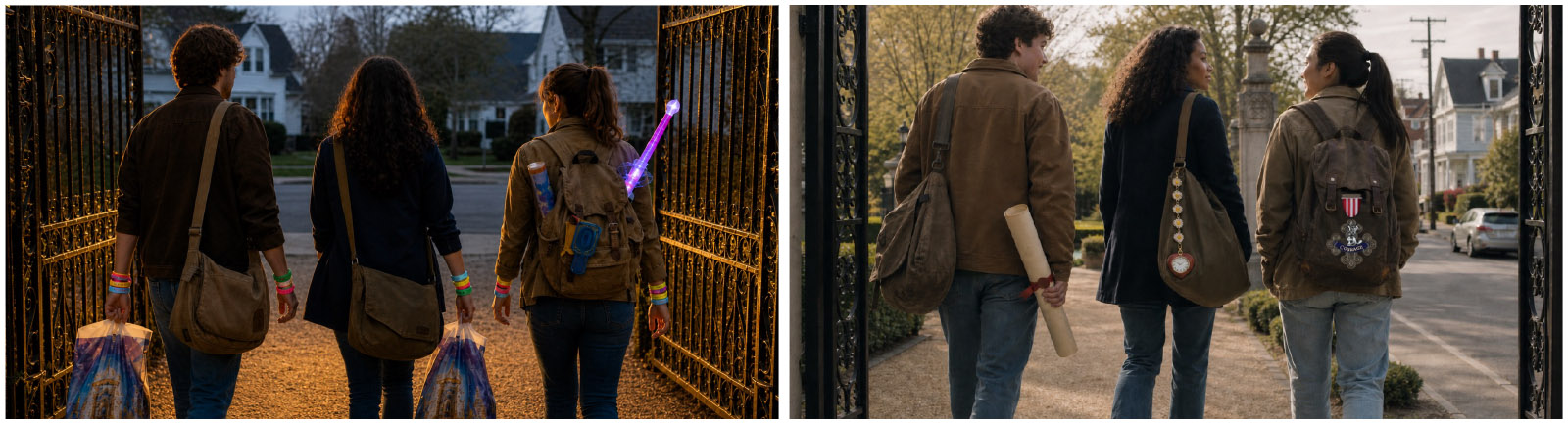
You can feel the difference in two exits.
In the first, the guest is happy, the photo is good, the survey will be fine. By Tuesday the visit has joined the pile of pleasant things that happened. In the second, something small got rearranged. A question they can't quite put down, and are maybe still trying to clearly ask. A way of seeing that shows up again when they're not at your place. Same smile at the door (sometimes). But different a week after.
I'm not arguing that every visit must transform someone. Escape is a real need. Two hours somewhere else after a heavy day is legitimate. But when we say we want lasting work, we should mean lasting in their life, not lasting as a memory of a branded hour. Memory is a kind of lasting. It can fill its role, but without more context it's still gone from how a person lives.
So run a diagnostic on the last thing you opened. What did you optimize for as you built? What did you hope you'd leave with them? Where did the language of wellness, meaning, or impact do work the design had not yet earned?
Good is a desirable outcome, but it shouldn't be confused with lasting.